Article published on Immoday.ch, 27 July 2026
Dominicé Asset Management took over the management of TrustStone real estate SICAV about a year ago. Since then, the fund has more than doubled in size, following three successful capital increases and the launch of several projects that had long been stalled. Among the projects underway is a major CHF 70 million development in Muttenz (Basel-Country), comprising more than 140 residential units. Further capital increases are also planned for the second half of the year, provided the pipeline materialises.
Things are moving forward well for TrustStone real estate SICAV. Less than a year after being taken over by Dominicé, the fund has already more than doubled in size, thanks to three capital increases totalling CHF 127 million. And that’s not all: the target is now a gross portfolio value of CHF 650 million by 2029. Diego Reyes, Senior Fund Manager at Dominicé, explains how he intends to get there.
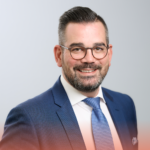
Diego Reyes, Senior Fund Manager
Diego Reyes, you took over TrustStone real estate SICAV a little under a year ago. At the time, you spoke of a portfolio with significant untapped potential. Where do things stand today?
That potential has materialised. The vacancy rate has been drastically reduced, from nearly 25% at the time of the takeover to 7.8% today. At the same time, on the real estate development front, we have unblocked several projects. We carried out substantial work on technical and budgetary repositioning, as well as consultation with the municipalities, to make these operations profitable.
It’s not always easy to unblock building permits. How do you go about it?
We have two project managers who devote a good part of their time to obtaining these permits. We also work with local partners who have in-depth knowledge of the administrative fabric of each region. This is essential to move very large files forward successfully — such as one of the most important projects in the SICAV’s portfolio: a CHF 70 million project in Muttenz (Basel-Country) for more than 140 residential units, whose value-creation potential is significant for the fund. But for that, we need to obtain an amendment to the general land-use plan. We are working on it.
Read also: Densifying an under-utilised plot: the Ruisselet 16 bet in Pully | Dominicé
Since the takeover, you have carried out three capital increases. The next one should close in July. What will the fund’s gross assets be at that point?
When we arrived, the SICAV weighed in at CHF 122 million. The gross value of the portfolio will reach approximately CHF 267 million.
Have you planned further capital increases for the second half of the year?
It will all depend on the available acquisition pipeline. Our logic is to build a solid pipeline first and then launch a fundraising round, not the other way around. And the current market is highly competitive, with prices that are sometimes excessive. If conditions are not right, we will not launch an operation. Today, our priority is to distribute a regular dividend, not to buy assets at inflated prices that would dilute the yield.
But why carry out three capital increases so close together? Would investors not have trusted you if there had been just one?
It’s a risk-management strategy. We first secure the assets and then raise the necessary capital. Investors thus have the assurance that their funds are deployed immediately. To give a sense of scale: one of our raises alone amounted to CHF 65 million, for a vehicle that weighed CHF 122 million at the time of the takeover — an increase of more than 50% in a single operation. In that context, proceeding in stages is healthier. Moreover, the success of each tranche demonstrates that investor confidence was indeed there.
Read also: TrustStone real estate SICAV – Annual Report 2025-2026 | Dominicé
Have you managed to attract new investors over the past 12 months?
Yes, our capital increases attracted around 75% new investors. The profile is mainly composed of private banks, wealth managers and entrepreneurs. The fund does not yet have the size or liquidity that large institutional investors require, but some are already starting to come in, which is an encouraging signal.
Has the fund’s investment strategy remained the same, or has it been modified since your takeover?
It remains mixed, but with a determination to strengthen the residential component so that it reaches around 40% of the portfolio. Today, commercial real estate supports the immediate yield and dividend, while residential development builds the portfolio’s long-term value.
You own buildings in peripheral regions such as Orbe and Muttenz. Is that your strategy for continuing to generate good returns in a market where property prices keep climbing?
No, it is not a periphery strategy. Muttenz, for that matter, is the immediate agglomeration of Basel, not the periphery. But your question raises an essential point: it is imperative to distinguish immediate yield from overall long-term performance. If you compare the same building in Le Locle and in Lausanne and extrapolate the evolution of prices per square metre and the valuation of the built asset, you will create far more long-term performance with the Lausanne property. In peripheral areas, the immediate yield is higher, but at the cost of a much greater risk premium and illiquidity. Some of our assets play this role of supporting yield and the dividend, but that is a controlled allocation choice, not a strategy of fleeing to the periphery to buy yield.
Read also: Direct Real Estate or Real Estate Funds: How Is Wealth-Holding Evolving? | Dominicé
A year ago, you told us that the fund’s size target was around CHF 300 million. You have almost reached it. What is the next objective?
Over the longer term, our roadmap aims to reach a portfolio of around CHF 650 million by 2029. But let me insist: this is not size for size’s sake. This scale will allow us to offer the liquidity and diversification that institutional investors expect, while maintaining the same discipline — we will only grow at the pace of opportunities that genuinely create value.
And after that, a stock market listing?
It is not a priority today. A listing only makes sense once a vehicle has reached critical mass and sufficient liquidity — which is precisely what our roadmap is about. If we achieve our objectives, the question will arise naturally.
Is there really investor interest in unlisted funds with no premium (agio)?
Absolutely. Entering at NAV, without a premium, is attractive for long-term investors: if the fund continues to grow and were one day to be listed, they would fully benefit from any premium that might then build up. In the meantime, the value of their investment tracks that of the real estate portfolio, without the stock market volatility that affects listed funds. Furthermore, we are currently seeing premiums that are at times well above the historical average, and some investors are no longer willing to pay such levels.
One of the objectives of the TrustStone takeover was the growth of Dominicé Asset Management. Where do you stand with your future developments in real estate?
In real estate, our goal is not to multiply products, but to bring TrustStone to its critical size and to continue growing our historic fund, which is about to cross the CHF 1 billion mark in assets.
Are you considering launching an L-QIF?
The L-QIF is generating a lot of interest in the market, but it is not our priority today. We prefer to focus all our resources on optimising the performance of our two existing real estate vehicles.