
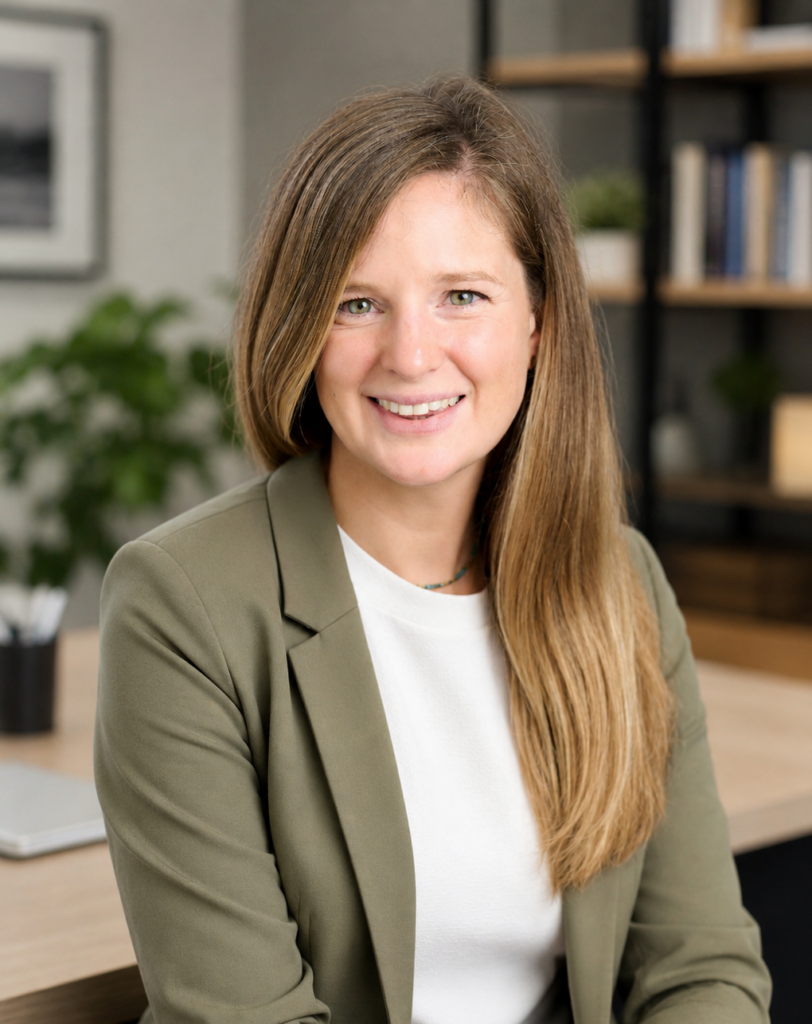
Published in Immoday.ch, May 1st 2026
In a Swiss real estate market where entry yields have compressed, a fund’s performance is no longer determined solely at the moment of acquisition. It depends above all on the ability to identify assets compatible with the vehicle’s strategy, to buy them at the right price, and then to realise the value-creation potential identified. Marie Lemaître, portfolio manager at Dominicé & Co Asset Management, explains how the firm selects its properties, structures its acquisitions, and deploys value across its portfolios.
Over the past two years, Swiss securitised real estate vehicles have reached record capital inflows — nearly CHF 9 billion in 2025. Capital that, beyond a few renovation projects, will be used primarily to expand portfolios.
Unfortunately, in the most sought-after locations, properties currently offered for sale deliver very compressed gross yields. This risks weighs on future performance if the acquisition is not supported by a genuine value-creation thesis. Hence the importance, as Marie Lemaître explains, of applying strict investment criteria in this highly competitive market, in order to identify buildings offering long-term value-creation potential. She presents Dominicé’s acquisition strategy.
Today, [a good return] is not necessarily a high yield on the day of acquisition. For us, a good asset is one capable of creating value within three to five years, through rental optimisation, targeted works, or sometimes a densification potential.
Marie Lemaître, is it still possible to find properties offering a good return on the Swiss market?
Yes, but we need to redefine what a good return means. Today, it is not necessarily a high yield on the day of acquisition. For us, a good asset is one capable of creating value within three to five years, through rental optimisation, targeted works, or sometimes a densification potential.
Isn’t it simpler to look directly for properties with high yields?
In the current competitive environment, properties that immediately display a very high yield often come with a trade-off: significant vacancy, technical weaknesses, or a more secondary location. Our job is therefore to identify potential that is not yet captured in the price, and to have the ability to materialise it.
How do you uncover these good opportunities? The official market is not exactly cheap.
The official market remains important to us, but it is a highly competitive, often efficient market where one must be selective and disciplined. We do not enter hoping to “get a bargain” at any cost; we enter when we believe an asset makes sense for a given fund and that genuine value creation exists.
Read also : DSPF completes four new acquisitions | Dominicé
Do you still participate in official tender processes?
Yes, primarily for portfolios or transactions of a certain size, because the investment in resources is more justified there.
So where do you find acquisition opportunities? In the off-market?
The off-market generally offers more room for negotiation, direct contact with the seller, and more time to work on the file. But it requires a pre-existing relationship — you do not receive an off-market mandate by chance. It is the result of several years of market presence, network-building, and execution credibility.
How is that credibility built?
By being a serious and predictable partner: analysing quickly, giving a clear answer — including when it is negative — honouring commitments, and following through on what you announce. In this profession, reputation is built over time. That is what creates trust and brings deal-bringers back.
Knowing what is available off-market is primarily a matter of network. How is that network built?
It is built over time, with notaries, developers, private owners, and intermediaries who know what we are looking for. Some proposals are also brought to us by the property managers we work with. That said, the network alone is not enough. What makes the difference is the ability to process a high volume of files with the same rigour: every file receives a response — whatever that response may be — within a reasonable timeframe. That is what sustains the relationship over time.
In the end, how many files do you receive?
Several per day. But most are quickly set aside because they do not match our needs. A few dozen files each month are studied in depth, and for those, we may eventually submit an offer. In reality, the added value lies not in the volume of files received, but in the quality of the selection.
What criteria allow you to select assets and determine their value-creation potential?
We systematically look at three dimensions.
First, location — because you can renovate a building, but you cannot move a street. We analyse the state of rental demand, the quality of the employment catchment area, infrastructure, and above all, the ability of the local market to sustain value over time.
Next, we look at the rental reversion — that is, the gap between in-place rents and market levels. The more real and actionable that gap is, the more interesting the revaluation potential.
Finally, there is structural potential: densification, underexploited floor space, energy renovation, repositioning.
It is the combination of these three elements that forms the investment thesis.
This analysis requires in-depth due diligence, which is not always possible in an acquisition context. How do you manage that?
It is a genuine tension in the profession and one must say so frankly. We are generally very fast at the non-binding offer (NBO) stage, because you need to be able to position quickly when a file is interesting. On the other hand, we take the necessary time at the binding offer (BO) stage, to secure the in-depth analysis before any definitive commitment. And when certain elements are still missing, we can submit conditional binding offers — precisely to maintain discipline without committing beyond what we have been able to verify. The principle is simple: be fast in positioning, but rigorous in commitment.
What is the minimum gross yield from which you are willing to engage?
We do not have a single threshold applied mechanically to every file. It all depends on the location, the rental reversion, the structural potential, but also the risk, the capex requirements, and the future liquidity of the asset.
A property at 3.5% in an excellent micro-location, with solid rental demand and genuine revaluation potential, can be more attractive than an asset at 5% in a secondary area. What we look at is not only the entry yield, but the total potential performance of the asset and its consistency with the strategy of the acquiring fund.
Competition is fierce: how do you secure a property you are interested in?
Speed and execution certainty are often decisive. A seller naturally wants a good price, but they also want to know the transaction will close. Being able to quickly submit a serious offer, with a clear financing framework and solid analysis, is a real advantage. In certain cases, our ability to process a portfolio as a whole is also decisive: each asset being directed towards the vehicle whose strategy best suits it.
Speaking of which, between the two funds managed by Dominicé, how is allocation decided?
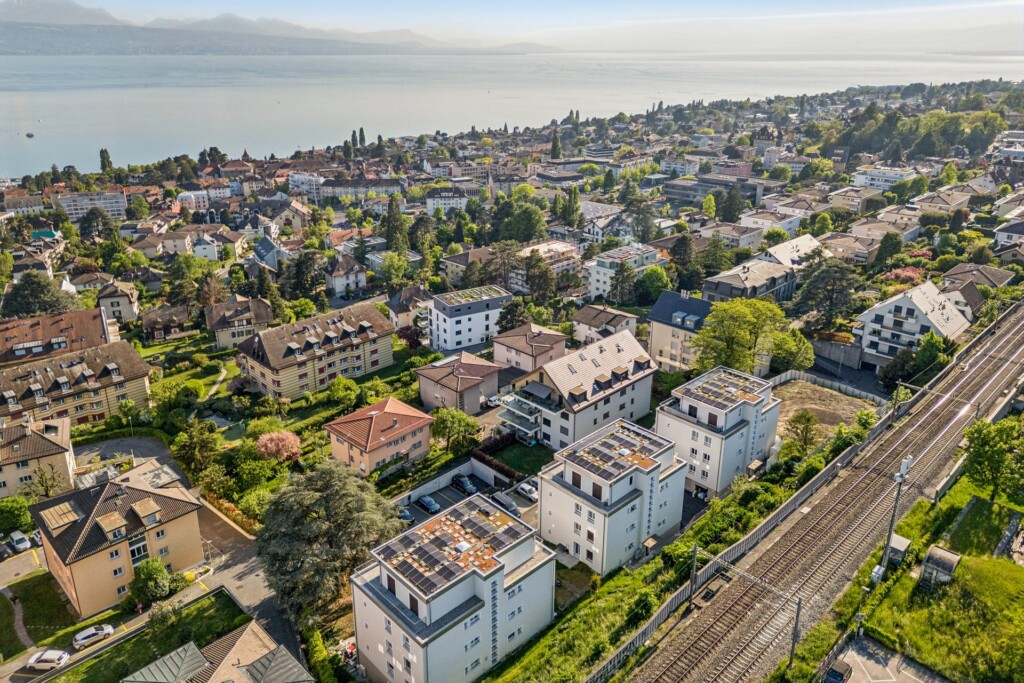
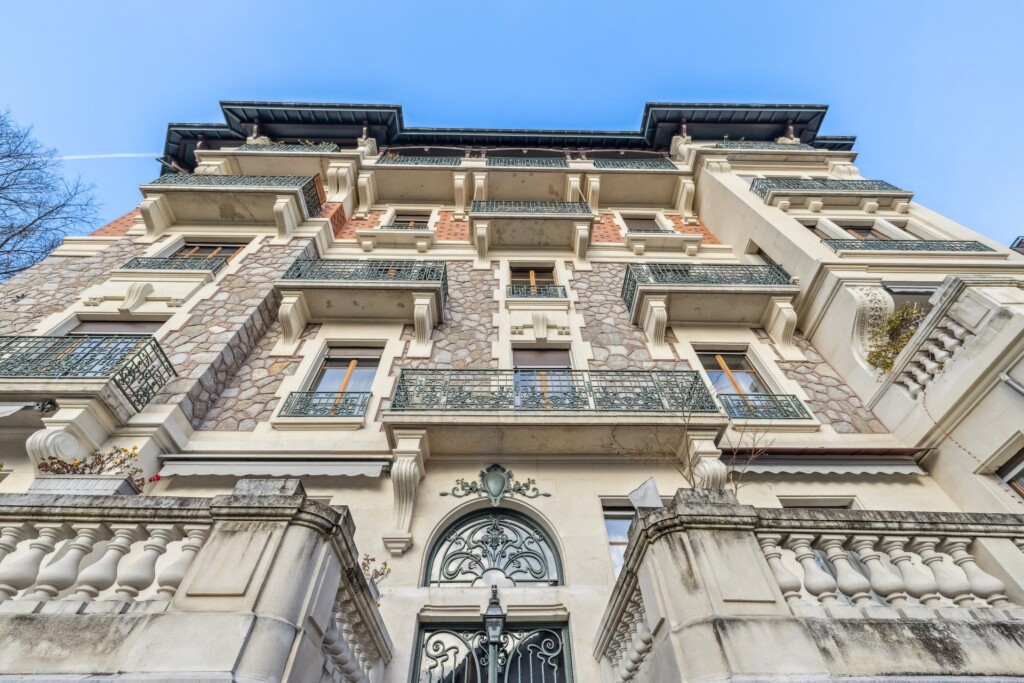
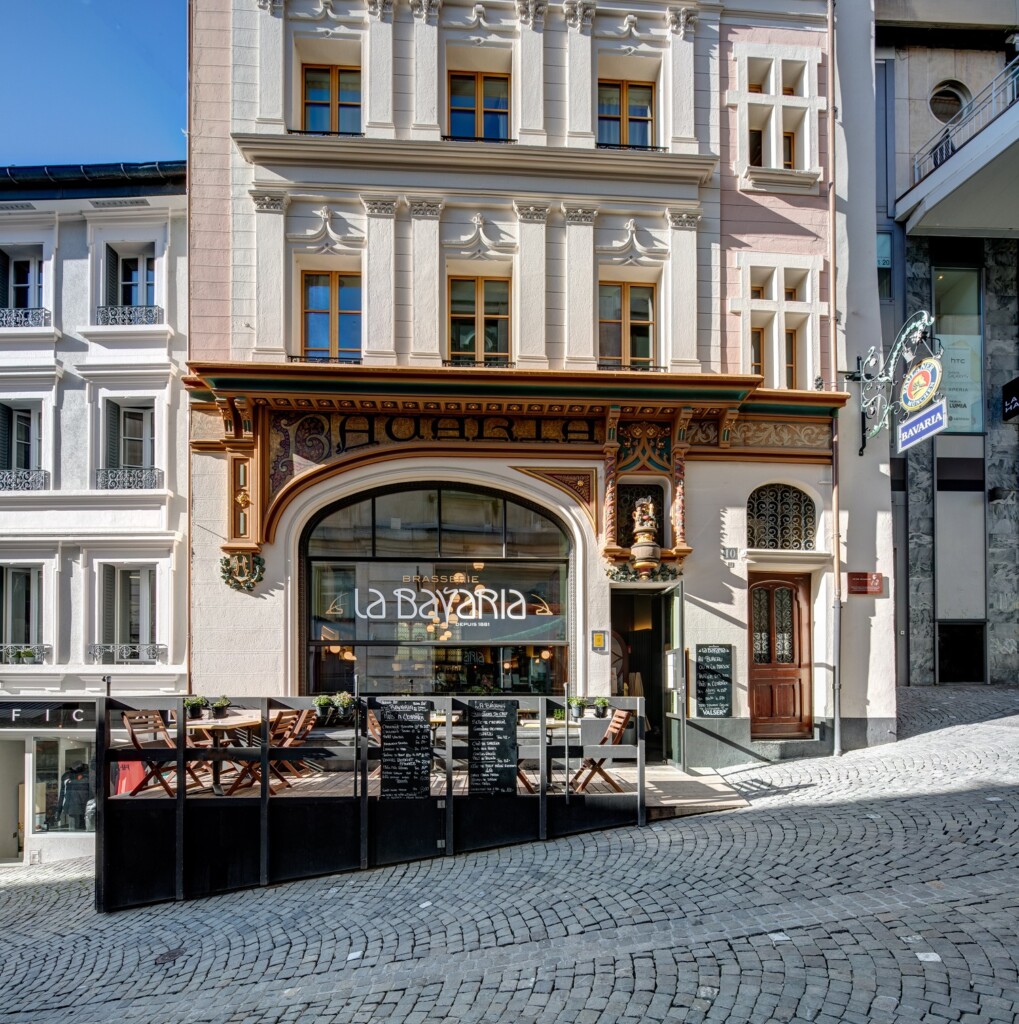
Allocation flows first from the strategy specific to each vehicle. Dominicé Swiss Property Fund, whose total portfolio value is approaching CHF 1 billion today, is more oriented towards residential assets located in major urban centres with stable cash flows. TrustStone Real Estate SICAV, with a portfolio of approximately CHF 220 million, has a broader universe — residential, mixed-use, and commercial — and a slightly higher yield logic. In the majority of cases, the very nature of the asset already allows it to be directed fairly naturally.
And when an asset could suit both funds?
We compare in a structured manner its fit with the strategy of each vehicle: asset type, yield level, risk profile, value-creation potential, impact on portfolio diversification, available liquidity, and effect on the indicators of the fund in question. The decision is then made within a formalised framework, at the investment committee, with documented rationale and full traceability. The objective is for the allocation to be objectively defensible — from the standpoint of the fund’s interest, and not from the standpoint of execution convenience, an internal preference, or any factor other than the interest of the fund and its investors. This is what allows conflicts of interest between vehicles to be managed cleanly.
Once you have found an asset of interest, how is the purchase decision actually made?
When a file has passed the NBO stage and the dataroom review confirms the asset’s potential, we trigger due diligence. This includes a thorough analysis of all elements in the dataroom, as well as a site visit with the operational team that will manage the property: the asset manager, the project manager, the fund manager, myself as portfolio manager, and the fund’s approved appraiser. Following the visit, we calculate internally the market rental state, the actionable rental reversion, projected capex over 10 to 15 years, and the densification potential where applicable.
And after due diligence?
The file is presented to the investment committee, composed of the fund manager, a Dominicé partner, and a representative from the investor relations team. Also present are the risk officer, the compliance officer, and the entire operational team that worked on the file — including the finance & controlling officer, who ensures that all due diligence steps have been completed and that the file complies with the fund’s strategy and applicable regulatory limits. The committee votes, and it is on the basis of that vote that we submit — or do not submit — a binding offer, conditional where necessary on the receipt of certain elements. This decision is made within the regulatory framework applicable to each vehicle, in coordination with the fund management company.
Acquisition is only the starting point. How do you concretely create value after entering the portfolio?
Value creation is actually prepared during due diligence itself. We analyse existing contracts in detail and identify those that will need to be terminated — whether too costly or superfluous. From the moment of acquisition, we terminate them, integrate the building into our framework agreements, and make a decision on the existing property manager: retain them, replace them, or at a minimum renegotiate the contractual framework. The goal is to integrate the property into our operational network as quickly as possible.
Then, as tenancies turn over, we renovate the vacated apartments and bring them back to market at current conditions. That is where the rental reversion identified during due diligence concretely materialises. In parallel, we deploy the capex plan defined upstream over 10 to 15 years, and where applicable, we develop the densification potential identified at acquisition.
Read also : Dominicé Swiss Property Fund ranks first among listed real estate funds over 5 years | Dominicé
Does all this acquisition work take up a great deal of your time?
Personally, taking into account file analysis, site visits, due diligence, reports, and exchanges, it probably represents around a third of my time. It is a very varied activity, because every asset has its own story and its own strategy, and we analyse both residential and commercial properties. It is also a genuine team effort, where each person brings their own perspective and expertise.
It is also what gives the work its meaning: every acquisition decision commits the fund’s performance for ten to fifteen years. It is a real responsibility towards investors, and it is what makes this part of the profession particularly demanding — and stimulating.