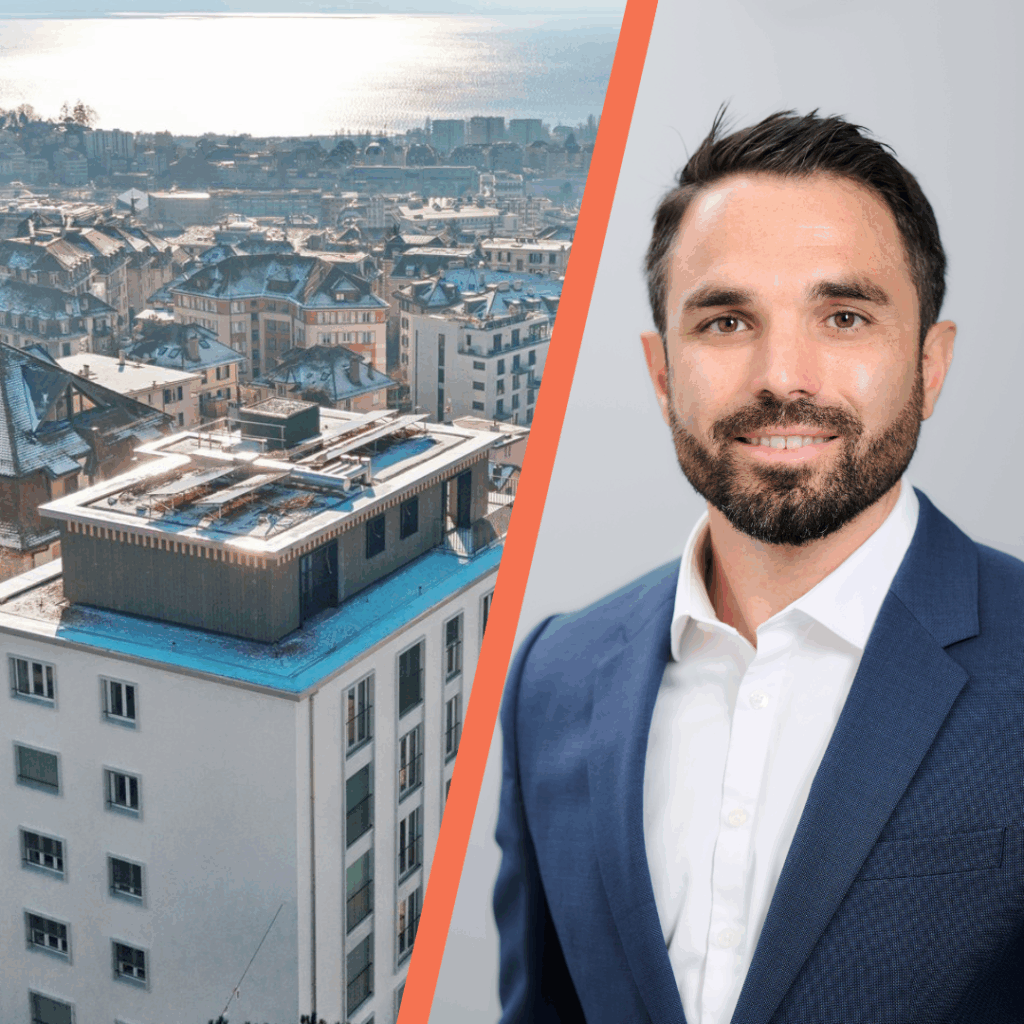
Real Estate Project Manager at Dominicé, François Lemercier looks back on the renovation and vertical extension of the Bergières 59 building in Lausanne owned by Dominicé Swiss Property Fund — an emblematic project combining heritage preservation, energy transition and economic performance.
To begin with, could you outline the key features of the Bergières project?
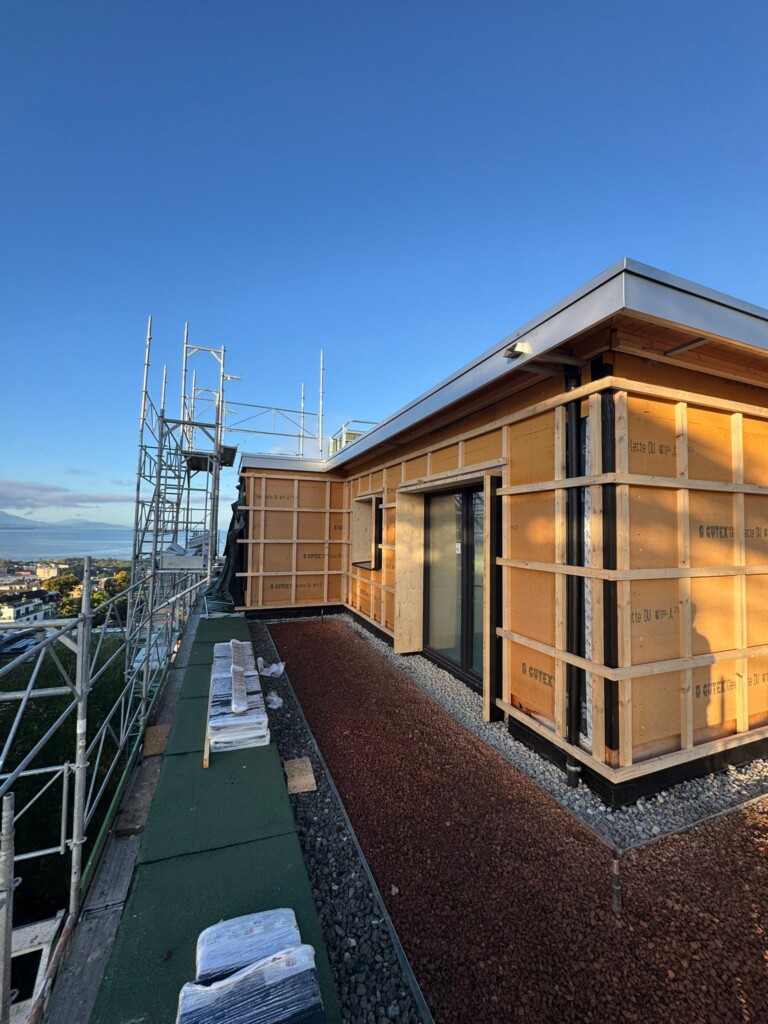
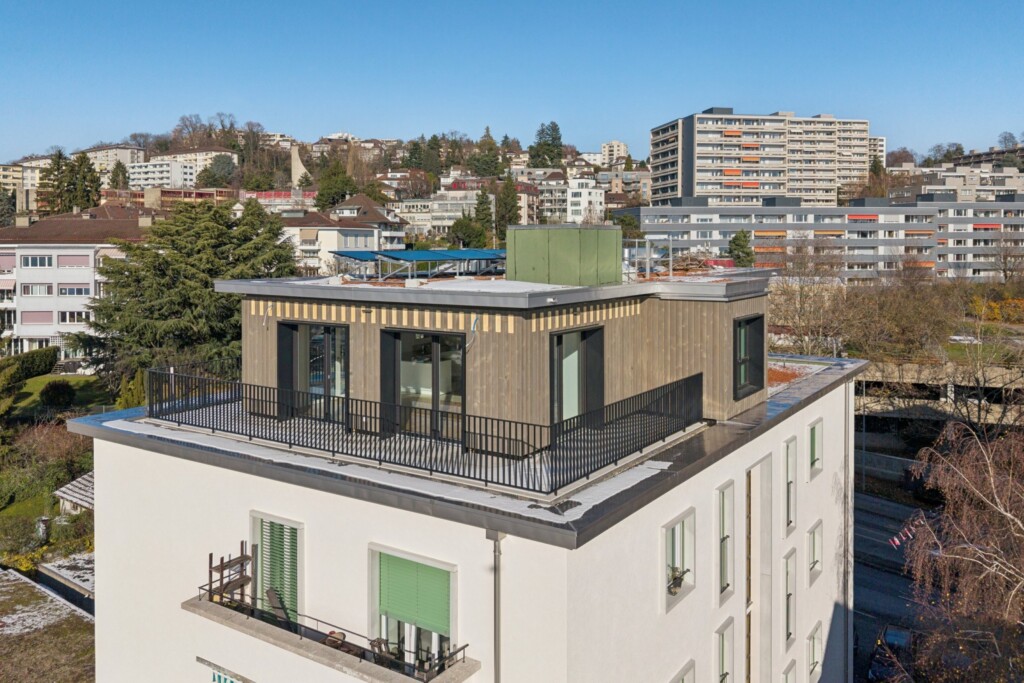
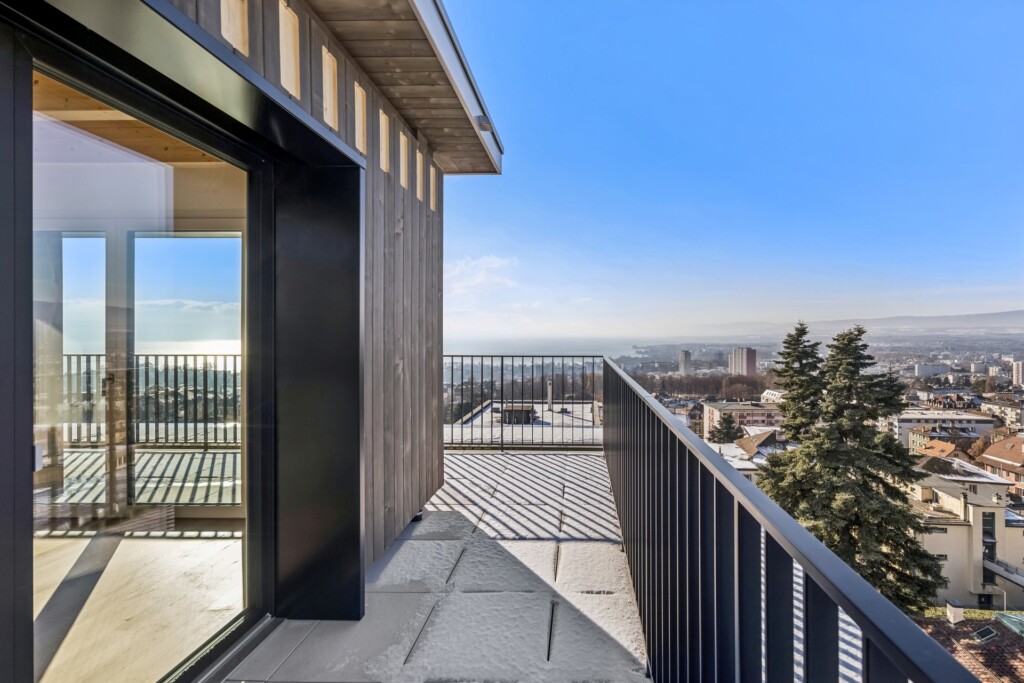
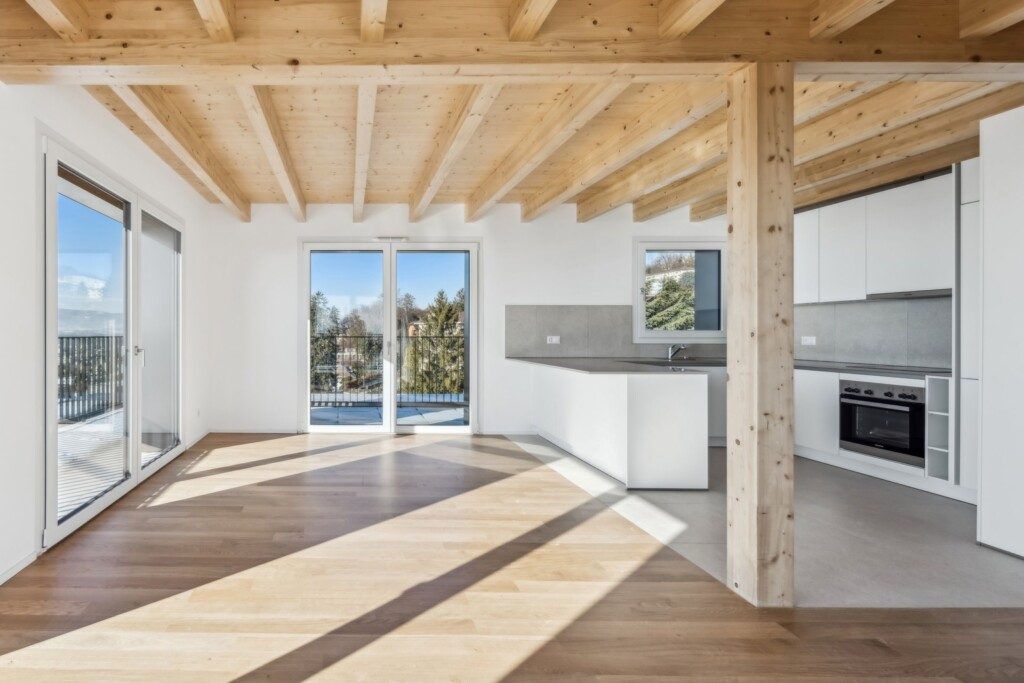
Bergières is an ambitious project that combines heritage value enhancement, energy transition and sustainable value creation. We carried out a comprehensive energy renovation while adding an additional storey, which made it possible to create a new 77 sqm penthouse with a 38 sqm south-facing terrace offering an exceptional view over Lake Geneva. The objective was twofold: to drastically reduce the building’s carbon footprint and to improve its economic performance. This project illustrates how an existing building can be transformed into a benchmark asset — energy-efficient while generating tangible economic value.
Read also: La Borde 17 à Lausanne, intéressant business case de démolition-reconstruction
What were the fund’s initial ambitions and priority objectives for this project?
The ambition was to demonstrate that demanding sustainability standards can be combined with controlled profitability, to the benefit of both tenants and investors.
We had three main objectives.
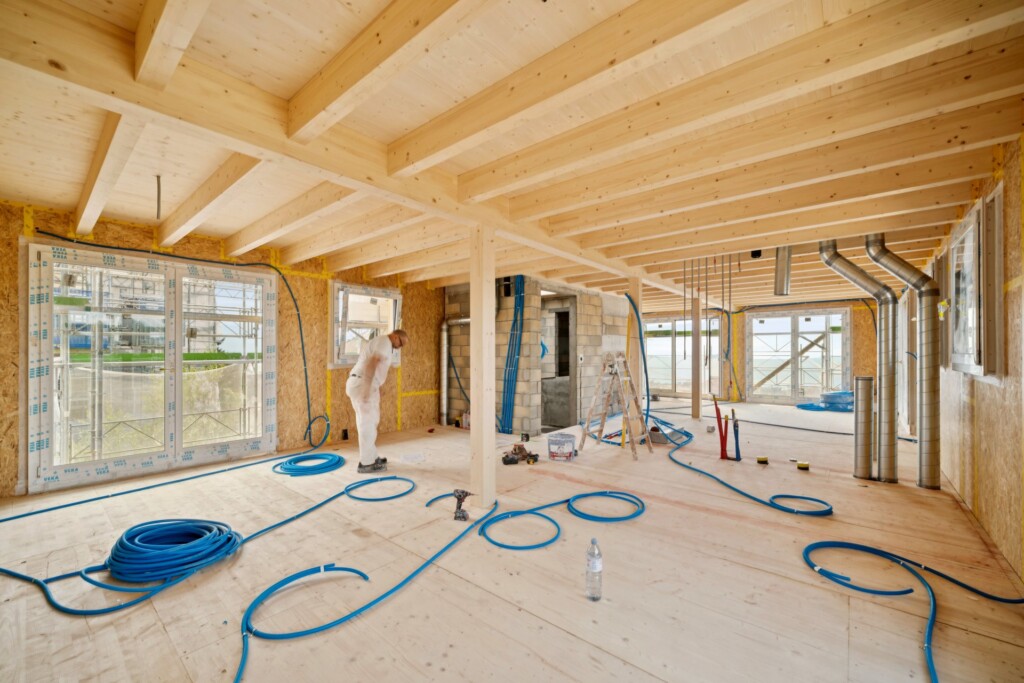
First, to improve the building’s energy performance. CO₂ emissions were reduced from 41 to 9 kg/sqm/year by replacing the oil-fired boiler with an air-to-water heat pump and upgrading the building envelope. This comprehensive renovation allowed the energy rating to improve from E to B.
The second objective was to increase rental potential through the vertical extension, which represents direct and measurable value creation.
Finally, the project aimed to preserve and enhance a heritage asset located in a rapidly evolving neighbourhood.
What was your role throughout the project?
The development department ensured overall project management, from the feasibility phase through to delivery.
My role was to ensure consistency between the fund’s ambitions, site constraints and regulatory requirements. I oversaw all technical, regulatory, budgetary and operational aspects, including coordination between the many stakeholders involved.
It is a transversal role that requires a constant balance between strategic vision and operational pragmatism.
In practical terms, how did the project unfold from design to delivery?
We began with potential studies — technical, energy-related and economic — which were decisive in defining the scope of the interventions.
We then obtained the necessary permits and optimised the project in close collaboration with the City. We subsequently managed the tendering process with discipline to control costs and timelines.
The success of the project relied on precise coordination between the architect, HVAC engineers, energy specialists and contractors, as well as rigorous management of commissioning, certification and letting phases.
This was a development built through successive iterations, integrating energy transition constraints and the fund’s economic requirements at every stage.
How does this project fit into the overall strategy of the Dominicé Swiss Property Fund?
The fund aims to hold resilient, modernised assets with strong value creation potential. Bergières perfectly illustrates this strategy: targeting buildings with transformation potential, investing heavily in energy performance and activating development rights where relevant.
The project also aligns with the fund’s objective of strengthening its ESG performance.
We are rated four stars by GRESB and rank second in our category, demonstrating that we fully play a leadership role in sustainability.
Read also: Dominicé Swiss Property Fund earns 4 stars in the 2025 GRESB ranking and an overall score of 85/100
What were the objectives at building, portfolio and investor level?
First, to preserve the value of the building in an increasingly demanding market. Second, to enhance the portfolio’s ESG performance through a significant improvement in energy efficiency.
The project also generates a 30% increase in rental income, representing more than CHF 100,000 in additional annual revenues.
Future energy costs are significantly reduced, benefiting both tenants and investors. Finally, the asset’s value is stabilised and strengthened over the long term thanks to its comprehensive modernisation.
What were the main challenges encountered during the construction phase
They were numerous.
From a technical standpoint: integrating a heat pump into an existing building, adding an extra storey while keeping tenants in place, and carrying out works within occupied apartments while limiting disturbances.
From an administrative perspective: the permitting process for a vertical extension is particularly demanding, requiring coordination between the City, the Heritage Department and the Minergie Renovation label.
Lastly, coordination itself was a major challenge, as structural and energy studies required several design adjustments. The key challenge was to maintain a balance between architectural ambition, technical constraints, economic viability and heritage enhancement.
What adjustments were required during the project?
We optimised the penthouse layout to maximise its rental value, adapted energy solutions to achieve the best performance-to-cost ratio, and rationalised certain architectural details to control costs and timelines. Structural reinforcements linked to the additional floor also led to project adjustments.
This is typical of complex developments: staying agile while never compromising the project’s core objectives.
Read also : Le Cabestan revealed to investors
The project was carried out in close collaboration with the Heritage Department. How did this influence technical and architectural choices?
Collaboration with the Lausanne Heritage Department was decisive through to project completion.
The department validated materials, colours, joinery and railings through a very precise material specification. We faithfully restored numerous elements: soffit panelling, the entrance door reproduced identically, and original colour schemes in the stairwell.
Certain constraints required specific technical solutions: repositioning windows to preserve reveal depths, reproducing surrounds identically, and fully replacing railings to comply with current standards.
The objective was always the same: to respect architectural authenticity while meeting contemporary requirements.
In your view, what is the “Dominicé signature” in a project like this?
It is an analytical, rigorous and performance-driven approach. We systematically seek the best balance between sustainability, returns and future potential. Every decision is carefully analysed and optimised. Above all, we know how to deliver complex operations in dense urban environments.
The Dominicé signature is also a strong long-term, heritage-oriented vision: investing today to secure tomorrow, for the benefit of both investors and tenants.
In 30 or 50 years, what would you like people to think about this project?
I would say: the combination of ambitious sustainability, uncompromising technical rigour and perfectly controlled project economics. If, in thirty years, the building remains exemplary in terms of comfort, carbon performance and heritage coherence, that will be proof that we delivered the right project.